
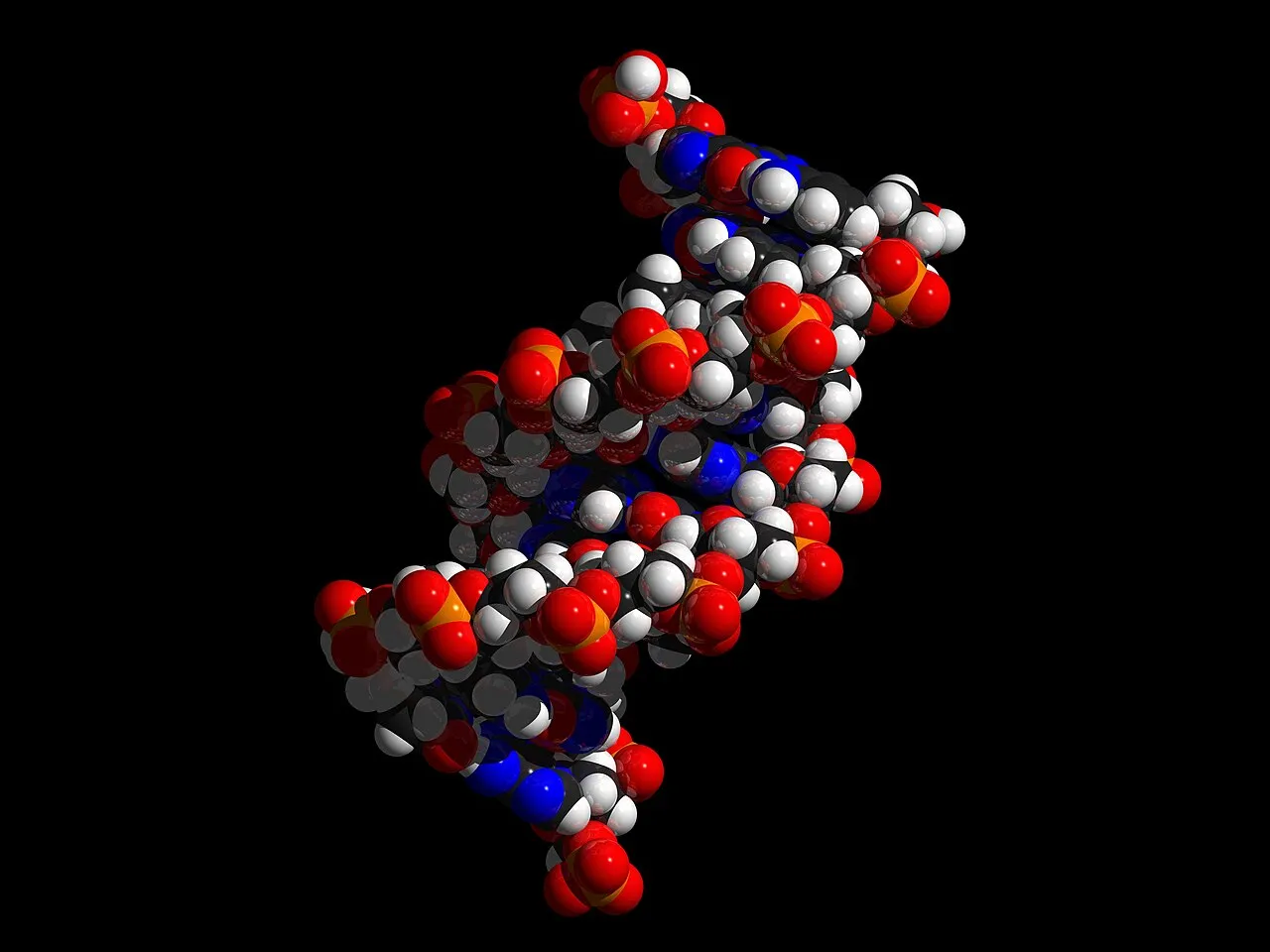
AOD9604: Mechanism, Clinical History, and Regulatory Status
Featured Product

A research-focused overview of the lipolytic HGH fragment — mechanism, the discontinued obesity program, and where things stand today
Regulatory status — read this first AOD9604 (also marketed under the alias HGH Fragment 176-191) is not approved by the FDA or any other government health authority for any human use. Its clinical development for obesity was discontinued in 2007 after a Phase 2b trial failed to separate from placebo. It is named explicitly on the World Anti-Doping Agency's 2026 Prohibited List (Section S2.2.3, growth hormone fragments) and is banned in competitive sport at all times. Everything in this article describes published research and publicly disclosed regulatory history — it is not medical advice, and it is not guidance for human use, self-administration, or purchase for personal use. |
What Is AOD9604?
AOD9604 — short for "Anti-Obesity Drug 9604" — is a synthetic peptide corresponding to the C-terminal region of human growth hormone (hGH), specifically the fat-metabolizing fragment spanning roughly residues 176-191, with a tyrosine residue added at the N-terminus to improve stability. It was developed at Monash University in Australia and later licensed to Metabolic Pharmaceuticals, an Australian biotech that pursued it through clinical trials as an obesity treatment through the 1990s and 2000s.
The rationale behind AOD9604 was straightforward: full-length hGH has a well-documented fat-reducing effect, but it also raises IGF-1 and can produce unwanted growth-related and insulin-sensitivity effects at the doses that would be needed for weight loss. Researchers isolated the fragment of the hGH molecule responsible for the lipolytic (fat-burning) effect, hoping to keep that benefit while leaving out the growth-hormone-receptor-mediated effects that come with the full molecule.
AOD9604 vs. HGH Fragment 176-191: Same Compound, Different Name?
This is one of the most common points of confusion in the research literature and across seller sites, and it's worth being precise about it. The unmodified, naturally occurring fragment of hGH spanning this region is a 15-amino-acid sequence, generally referred to as HGH Fragment 176-191. AOD9604 is a modified, 16-amino-acid version of that same fragment, with an added tyrosine residue at the N-terminus specifically to improve the molecule's stability. In practice, the two names are frequently used interchangeably in casual and commercial contexts, but they are not strictly the same molecule — AOD9604 is a stabilized derivative of the natural fragment, not an identical copy of it.
The Mechanism: Beta-3 Adrenergic Receptor Signaling
AOD9604's proposed mechanism centers on the beta-3 adrenergic receptor (β3-AR), a receptor found on the surface of adipocytes (fat cells) that plays a central role in regulating lipolysis. The foundational mechanistic work here is a 2001 study published in Endocrinology by Heffernan and colleagues, which found that both full-length hGH and AOD9604 increased body-weight loss and lipolytic sensitivity in obese mice, and that both compounds restored suppressed β3-AR expression in obese animals toward the levels seen in lean animals.
The same study used β3-AR knockout mice — animals genetically engineered to lack the receptor — and found that in those mice, chronic AOD9604 treatment produced none of the weight-loss or lipolytic effects seen in normal mice. That result is the strongest evidence in the literature that AOD9604's fat-metabolism effects depend specifically on this receptor pathway.
Mechanistically, researchers describe a two-part effect: activation of β3-AR increases cyclic AMP and activates hormone-sensitive lipase, which breaks down stored triglycerides into free fatty acids (lipolysis), while the same signaling is described as suppressing lipogenesis — the process of forming new fat stores. A frequently cited distinction from full-length hGH is that AOD9604 does not bind the classical growth hormone receptor and, in the available research, does not raise IGF-1 levels — which is the mechanism responsible for several of full hGH's less desirable metabolic effects at high doses.
Clinical Trial History: What Happened to AOD9604's Obesity Program
Why this section matters Many commercial pages describing AOD9604 cite only the early, favorable 12-week study and stop there. The full picture includes what happened next — and it's relevant to how researchers should weigh the compound's evidence base today. |
Between the early 2000s and 2007, Metabolic Pharmaceuticals ran a series of human trials evaluating AOD9604 as an oral obesity treatment:
- A Phase 2a trial (roughly 300 participants, 12 weeks) reported a modest but statistically significant weight loss of approximately 2.6 kg on AOD9604 versus 0.8 kg on placebo.
- A larger Phase 2b trial — publicly referred to as the OPTIONS study — enrolled 536 participants across multiple oral dose arms (0.25 mg, 0.5 mg, and 1 mg daily) against placebo, over 24 weeks.
The Phase 2b trial did not meet its primary efficacy endpoint: none of the tested doses produced a weight-loss result that was statistically distinguishable from placebo. Metabolic Pharmaceuticals announced the result in an ASX filing in February 2007, titled, in substance, that the Phase 2b results did not support commercial viability for the obesity indication. Formal drug development for weight loss was discontinued shortly after.
The trial record does show a consistent safety signal across the program: pooled analyses covering roughly 900 participants across six controlled trials have generally described AOD9604's tolerability as similar to placebo, with no signal of the IGF-1 elevation, insulin resistance, or fluid retention associated with full-length hGH at anti-obesity doses. AOD9604 also received a Generally Recognized as Safe (GRAS) designation from the FDA for use as a food ingredient — a distinct regulatory category that does not constitute drug approval and does not authorize its use as an injectable or therapeutic product.
Beyond Fat Loss: Preclinical Cartilage and Osteoarthritis Research
After the obesity program ended, a separate line of preclinical research examined AOD9604 in a joint-health context. The most-cited study here is Kwon and Park (2015, Annals of Clinical and Laboratory Science), which used a collagenase-induced knee osteoarthritis model in 32 New Zealand White rabbits. Animals received weekly intra-articular (into-the-joint) injections of either saline, hyaluronic acid, AOD9604 alone, or AOD9604 combined with hyaluronic acid, over four to seven weeks.
The study reported that AOD9604 alone improved cartilage regeneration scores compared to saline, and that the AOD9604-plus-hyaluronic-acid combination outperformed either agent alone on both histological and functional (lameness) measures. This remains, in the published literature, a single animal study — there is no published human trial data supporting a cartilage or osteoarthritis application, and it should be read as a preclinical research signal rather than an established finding.
Regulatory Status: FDA, WADA, and RUO Positioning
Authority | Status |
|---|---|
U.S. FDA — drug approval | Not approved for any indication. Obesity development was discontinued in 2007 after the Phase 2b trial. |
U.S. FDA — compounding category | Classified as a Category 2 bulk drug substance; in December 2024 the FDA's Pharmacy Compounding Advisory Committee (PCAC) voted against recommending AOD9604 for the 503A Bulks List. |
U.S. FDA — food-ingredient status | Holds a GRAS designation for use as a food ingredient — a separate category from drug approval, and not an authorization for injectable or therapeutic use. |
World Anti-Doping Agency (WADA) | Explicitly named in the 2026 Prohibited List under Section S2.2.3 (growth hormone fragments), alongside HGH Fragment 176-191. WADA's earlier public position (2013) held that AOD9604 had been prohibited under the S0 ("non-approved substances") category since 2011. It is banned at all times, in- and out-of-competition. |
RUO market | Sold by research-chemical suppliers strictly for laboratory research use, not for human administration. |
Frequently Asked Questions
What is AOD9604?
AOD9604 is a synthetic 16-amino-acid peptide derived from the fat-metabolizing (lipolytic) region of human growth hormone, developed at Monash University and later studied by Metabolic Pharmaceuticals as a potential obesity treatment. It is not FDA-approved.
What does AOD9604 stand for?
Anti-Obesity Drug 9604 — the internal development code assigned during its original drug-candidate research program.
How does AOD9604 work?
Research indicates it acts through the beta-3 adrenergic receptor on fat cells, promoting lipolysis (breakdown of stored fat) and inhibiting lipogenesis (formation of new fat stores), without binding the classical growth hormone receptor or raising IGF-1.
Is AOD9604 the same as HGH Fragment 176-191?
They are closely related but not identical. HGH Fragment 176-191 is the natural 15-amino-acid hGH fragment; AOD9604 is a modified, 16-amino-acid version with an added stabilizing tyrosine residue.
What is the difference between AOD9604 and full HGH?
Full-length hGH binds the growth hormone receptor and raises IGF-1, which drives both its fat-reducing effects and its growth- and insulin-related side effects. AOD9604 is limited to the fragment associated with the lipolytic effect and, in the published research, does not raise IGF-1.
Is AOD9604 FDA approved?
No. It has never been approved by the FDA for any human therapeutic use. It holds only a GRAS designation as a food ingredient, which is not a drug approval.
Why was AOD9604 development discontinued?
Its Phase 2b obesity trial (536 participants, 24 weeks) did not meet its primary weight-loss endpoint against placebo. Metabolic Pharmaceuticals discontinued the obesity development program following that result in 2007.
Did AOD9604 clinical trials succeed?
An earlier, smaller Phase 2a trial (12 weeks) reported a statistically significant weight-loss result over placebo. The larger, pivotal Phase 2b trial that followed did not replicate a significant effect, which is why the program was discontinued.
Is AOD9604 legal to buy?
It is sold by research-chemical suppliers as a Research Use Only product, not approved for human use. Its status for personal use varies and is a separate question from its RUO/laboratory-research availability; athletes and RUO buyers should be aware it is not an approved drug.
Is AOD9604 banned by WADA?
Yes. It is explicitly named on the World Anti-Doping Agency's 2026 Prohibited List under Section S2.2.3, growth hormone fragments, and is prohibited at all times, in- and out-of-competition.
How many amino acids does AOD9604 have?
16 amino acids — the hGH C-terminal fragment sequence plus an added N-terminal tyrosine residue for stability.
What is a certificate of analysis for peptides?
A certificate of analysis (COA) is a lab document verifying a peptide batch's identity and purity, typically via HPLC and mass spectrometry, along with testing for contaminants such as bacterial endotoxins.
Who originally developed AOD9604?
It was developed at Monash University in Australia and subsequently licensed to Metabolic Pharmaceuticals, which ran its clinical development program through the 2000s.
Has AOD9604 been studied outside of fat-loss research?
Yes. A 2015 rabbit study (Kwon and Park) examined intra-articular AOD9604 injections in a collagenase-induced osteoarthritis model and reported improved cartilage regeneration, particularly when combined with hyaluronic acid. This remains preclinical, animal-only evidence.
What did AOD9604's Phase 2B trial show?
Across 536 participants and multiple oral doses over 24 weeks, none of the tested AOD9604 doses produced a weight-loss result that was statistically different from placebo, which is why the obesity development program was discontinued.