Every researcher working with peptides faces the same critical challenge: accurately reconstituting lyophilized peptide powder into a stable, properly concentrated solution. A single miscalculation in bacteriostatic water ratios can compromise months of research, waste expensive peptide vials, or produce inconsistent experimental results. That's where a reliable peptide calculator becomes an essential laboratory tool.
This comprehensive guide provides U.S. research laboratories with the definitive resource for peptide reconstitution calculations, bacteriostatic water ratios, microgram-to-milligram conversions, and sterile technique protocols. Whether you're working with Retatrutide, Tesamorelin, BPC-157, TB-500, or any research peptide, mastering these calculations ensures precision, reproducibility, and optimal peptide stability.
For researchers seeking the highest quality: 99PurityPeptides provides 99% purity research peptides with full Certificates of Analysis and third-party ISO-certified lab testing—ensuring your reconstitution calculations are based on verified peptide content.
Looking for the full mL-to-units and mg/mL breakdown by vial size? See the complete bacteriostatic water reconstitution chart for every common ratio at a glance.
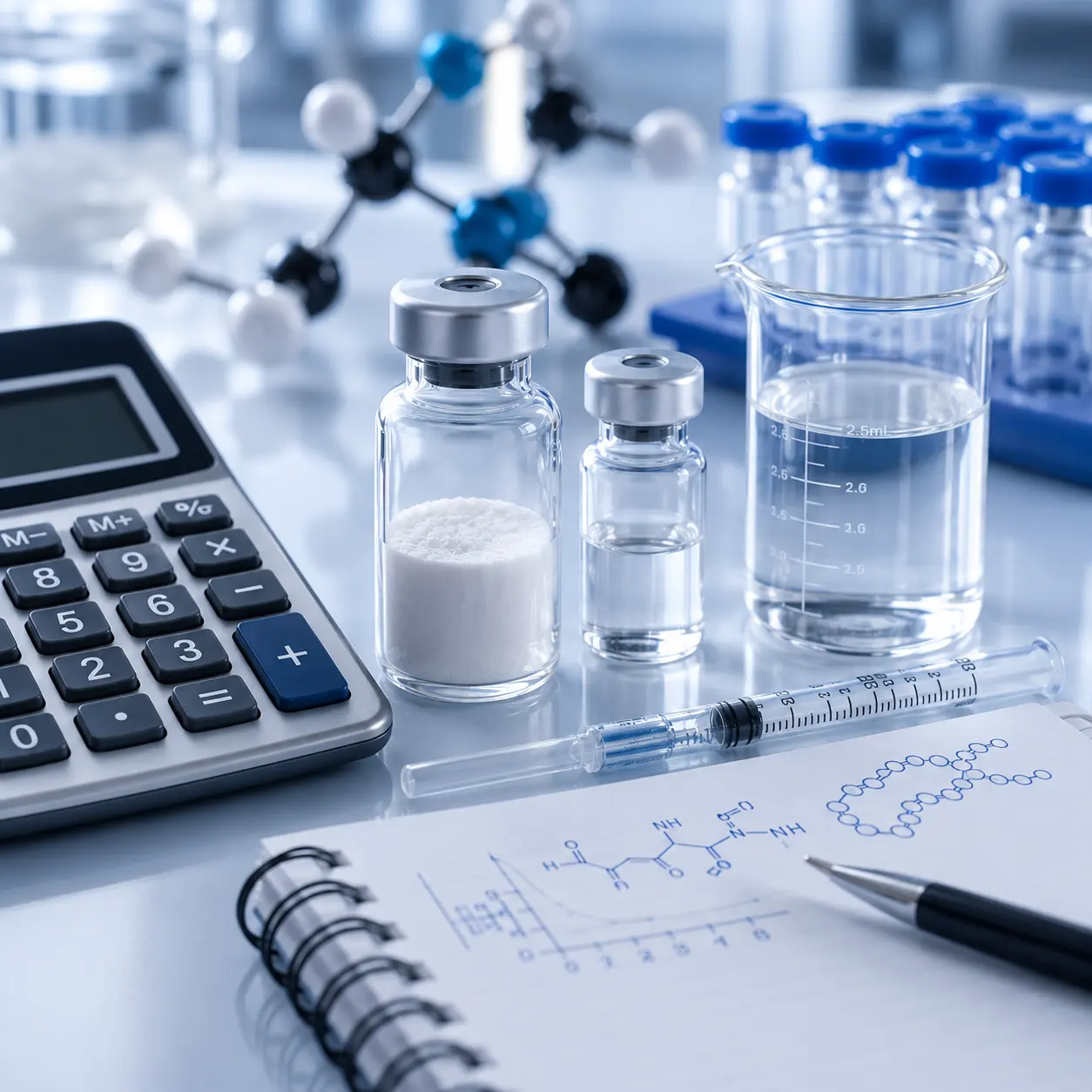
What Is a Peptide Calculator and Why Do Researchers Need It?
A peptide calculator is a specialized calculation tool designed to determine the exact amount of bacteriostatic water needed to reconstitute lyophilized peptide powder to a desired concentration. Unlike standard dilution calculators, peptide calculators account for the unique characteristics of peptide vials, including:
- Vial overfill considerations (most vials contain 5-10% overfill beyond the stated amount)
- Microgram-to-milligram conversions for precise dosing
- U-100 syringe marking translations for subcutaneous research protocols
- Concentration-specific stability factors affecting peptide shelf-life post-reconstitution
Research laboratories rely on peptide calculators because manual calculations introduce human error—a critical concern when working with expensive, precision-sensitive compounds. A 10mg peptide vial reconstituted with 2mL of bacteriostatic water yields a 5mg/mL concentration, but calculating individual doses in micrograms requires additional conversion steps that are error-prone without proper tools.
The research imperative: Peptide concentration directly affects experimental reproducibility. A study published in the Journal of Pharmaceutical Sciences demonstrated that improper reconstitution led to concentration variances exceeding 15% in peptide solutions, significantly impacting research outcomes. Using a validated peptide calculator eliminates this variance source.
Step-by-Step Guide: How to Reconstitute a Peptide Vial
Proper peptide reconstitution requires meticulous attention to sterile technique, temperature equilibration, and gentle mixing protocols. Follow this U.S. laboratory-standard protocol for optimal results:
Step 1 – Prepare Your Workspace and Materials
Create a contamination-free workspace by cleaning your benchtop with 70% isopropyl alcohol. Assemble all required materials:
- Lyophilized peptide vial
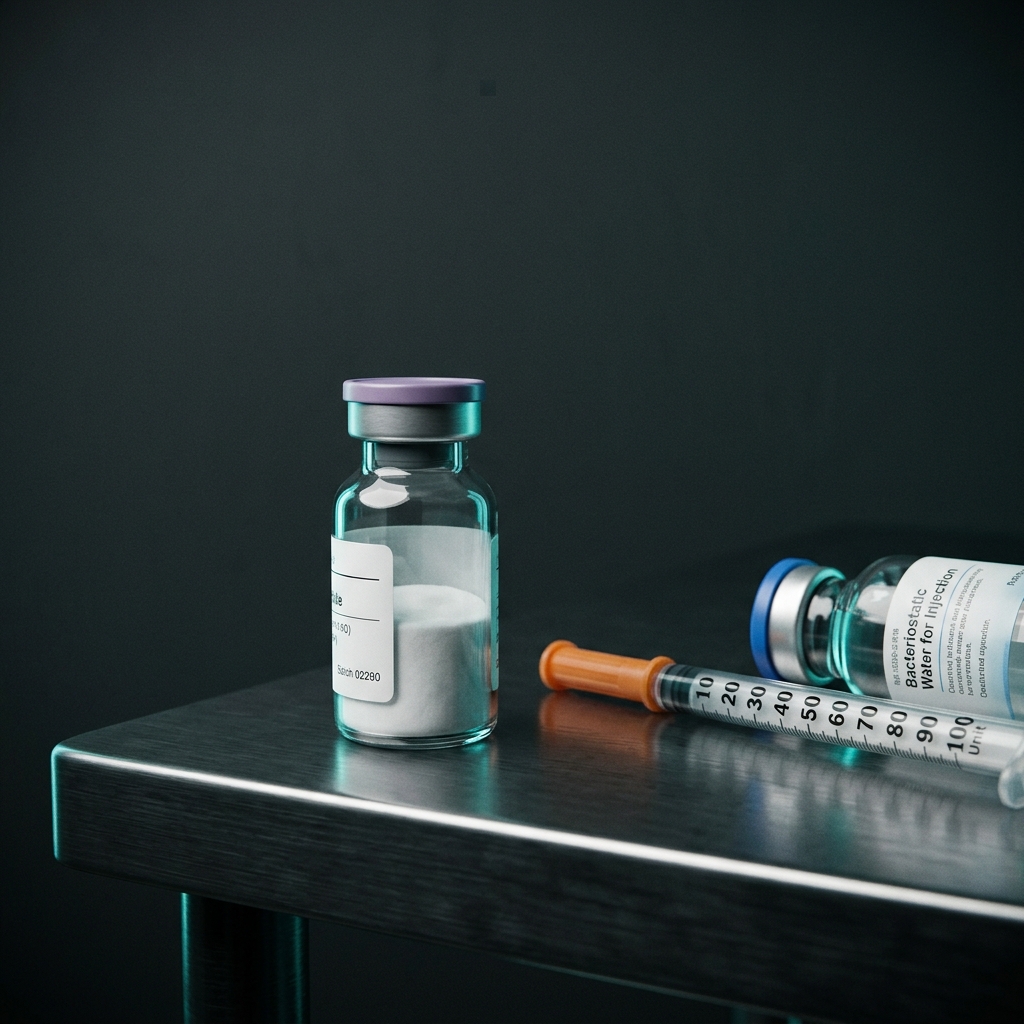
- Bacteriostatic water for injection (0.9% benzyl alcohol)
- Sterile syringes (typically 3mL for reconstitution)
- Alcohol prep pads
- Sharps disposal container
Step 2 – Equilibrate the Peptide Vial to Room Temperature
Remove the lyophilized peptide vial from refrigerated storage and allow it to reach room temperature (20-25°C) for 15-20 minutes. This critical step prevents condensation from forming inside the vial when bacteriostatic water is added, which can:
- Introduce uncontrolled water into the reconstitution (altering final concentration)
- Create localized temperature differentials affecting peptide stability
- Complicate visual verification of complete reconstitution
Step 3 – Sterilize the Vial Top and Prepare Bacteriostatic Water
Using an alcohol prep pad, thoroughly swab the rubber stopper of both the peptide vial and bacteriostatic water vial. Allow alcohol to air-dry completely (30-60 seconds) before proceeding—puncturing while wet can introduce alcohol into the solution.
Calculate your required bacteriostatic water volume using the peptide calculator below or this formula:
For example: 10mg peptide ÷ 2mg/mL desired concentration = 5mL bacteriostatic water
Step 4 – Add Bacteriostatic Water Slowly
Insert the syringe needle into the bacteriostatic water vial and draw your calculated volume. Then, slowly inject the bacteriostatic water into the peptide vial using one of two techniques:
- Technique A (Wall Method): Aim the needle at the inside wall of the vial, allowing the bacteriostatic water to run gently down the glass rather than directly onto the peptide powder. This minimizes foaming and peptide degradation from mechanical agitation.
- Technique B (Angle Method): Insert the needle at a 45-degree angle and inject very slowly (over 20-30 seconds for 2mL), allowing natural pressure equalization to prevent forceful mixing.
Step 5 – Gently Dissolve the Peptide
After adding bacteriostatic water, allow the vial to sit undisturbed for 3-5 minutes. Most lyophilized peptides will begin dissolving spontaneously. If peptide powder remains visible, gently roll the vial between your palms (do not shake) or swirl in slow, circular motions. Complete reconstitution is achieved when the solution appears clear and no visible particles remain. Some peptides may require 10-15 minutes for full dissolution.
Step 6 – Verify Full Reconstitution
Inspect the reconstituted solution against a light source. A properly reconstituted peptide solution should be clear or slightly opalescent, free of visible particles, and homogeneous in appearance. If cloudiness persists after 15 minutes, do not use the solution.
Step 7 – Store the Reconstituted Peptide Properly
Immediately label the vial with the peptide name, concentration, reconstitution date, and expiration date. Store reconstituted peptides at 2-8°C (refrigerated) protected from light. Never freeze reconstituted peptide solutions—ice crystal formation physically disrupts peptide structure, leading to irreversible aggregation and loss of biological activity.
Interactive Peptide Calculator Tool
Our precision calculator instantly determines bacteriostatic water requirements and U-100 syringe dosing based on your vial size.

Bacteriostatic Water Ratios for Common Vial Sizes
Understanding standard bacteriostatic water ratios accelerates reconstitution while maintaining optimal peptide stability. These ratios are based on U.S. laboratory protocols and published peptide stability research:
| Vial Size | Bacteriostatic Water | Final Concentration | Use Case |
|---|---|---|---|
| 5mg | 1mL | 5mg/mL | Maximum concentration |
| 5mg | 2mL | 2.5mg/mL | Sweet spot / Balanced stability |
| 10mg | 5mL | 2mg/mL | Most recommended / Standard |
| 10mg | 10mL | 1mg/mL | Long-term stability optimization |
| 20mg | 10mL | 2mg/mL | Institutional research standard |
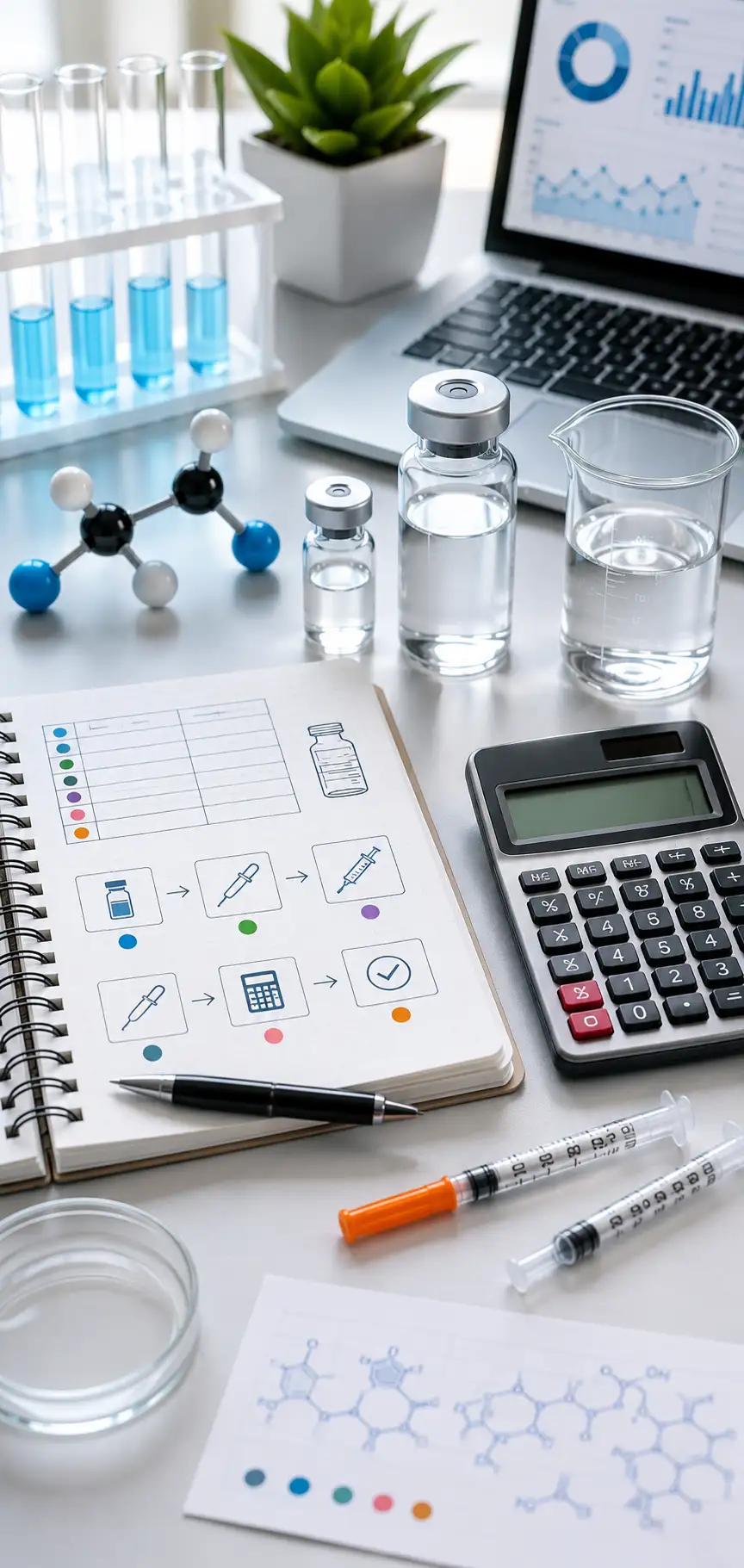
Common Peptide Reconstitution Mistakes (And How to Avoid Them)
Mistake #1: Vigorous Shaking
Error: Shaking peptide vials to accelerate dissolution.
Solution: Gently roll the vial between palms or use slow circular swirling motions. Allow 10-15 minutes for complete dissolution if needed.
Mistake #2: Ignoring Temperature Equilibration
Error: Reconstituting cold peptide vials immediately after removing from refrigeration.
Solution: Always allow peptide vials to reach room temperature (15-20 minutes) before reconstitution to avoid condensation.
Mistake #3: Incorrect Concentration Math
Error: Confusing peptide vial amount with desired concentration (e.g., adding 10mL water to a 10mg vial thinking it creates "10mg" solution).
Solution: Always use a validated peptide calculator and double-check calculations.
Mistake #4: Improper Storage
Error: Storing reconstituted peptides at room temperature, or in the freezer.
Solution: Always refrigerate reconstituted peptides (2-8°C), protect from light, and never freeze after reconstitution.
Frequently Asked Questions
How does a peptide calculator work?
A peptide calculator uses the fundamental dilution formula to determine how much bacteriostatic water is needed to achieve a desired peptide concentration. The calculation is: Volume of Bacteriostatic Water (mL) = Peptide Vial Amount (mg) ÷ Desired Concentration (mg/mL). Advanced peptide calculators also provide dose-per-unit conversions for U-100 insulin syringes and microgram-to-milliliter translations for precise research dosing.
How do I reconstitute a peptide vial?
To reconstitute a peptide vial: (1) Allow the vial to reach room temperature, (2) Sterilize the rubber stopper with an alcohol prep pad, (3) Draw the calculated amount of bacteriostatic water into a sterile syringe, (4) Slowly inject the bacteriostatic water down the inside wall of the vial to avoid foaming, (5) Gently roll the vial to dissolve—never shake, (6) Verify the solution is clear with no visible particles, and (7) Store refrigerated at 2-8°C protected from light.
How much bacteriostatic water do I add to a 10mg peptide vial?
For a 10mg peptide vial, add 2mL for a 5mg/mL concentration (500mcg per 0.1mL), 5mL for a 2mg/mL concentration (200mcg per 0.1mL, most commonly recommended), or 10mL for a 1mg/mL concentration (100mcg per 0.1mL, optimized for long-term stability). The 2mg/mL concentration (5mL bacteriostatic water) provides the best balance of concentration, stability, and dosing precision.
How do I calculate peptide dose in mcg after reconstitution?
To calculate dose in micrograms (mcg): First, determine your solution concentration in mg/mL. Then use this formula: Dose (mcg) = Volume Drawn (mL) × Concentration (mg/mL) × 1,000. For example, if you have a 2mg/mL solution and draw 0.15mL: 0.15mL × 2mg/mL × 1,000 = 300mcg. Alternatively, use the "dose per 0.1mL" value from your peptide calculator and scale proportionally based on syringe markings.
How do I use a peptide calculator for my 5mg vial?
For a 5mg vial, enter "5" as the peptide amount in the calculator, then select your desired concentration (typically 1-2.5mg/mL). The calculator will display: required bacteriostatic water volume, dose per 0.1mL, and dose per 10 IU mark on a U-100 syringe. For example, choosing 2.5mg/mL concentration requires 2mL bacteriostatic water and delivers 250mcg per 0.1mL (10 units on a U-100 syringe).
What is the safest way to reconstitute peptides?
The safest reconstitution method involves: (1) Using sterile technique (clean workspace, alcohol swabs, sterile syringes), (2) Using bacteriostatic water for injection—never tap water, distilled water, or saline, (3) Allowing peptide vials to equilibrate to room temperature before reconstituting, (4) Injecting bacteriostatic water slowly down the vial wall rather than directly onto the powder, (5) Avoiding shaking or vigorous agitation, and (6) Storing reconstituted peptides refrigerated (2-8°C) and protected from light.
How do I store reconstituted peptides?
Store reconstituted peptides in a refrigerator at 2-8°C (36-46°F) immediately after reconstitution. Keep vials upright, protected from light (wrap in aluminum foil or use amber vials if available), and away from the freezer compartment. Never freeze reconstituted peptides—ice crystal formation irreversibly damages peptide structure. Properly stored with bacteriostatic water, most peptides maintain stability for 28-30 days. Always label vials with reconstitution date and discard after expiration.
How long can reconstituted peptides last?
Reconstituted peptides stored properly (2-8°C, with bacteriostatic water, protected from light) typically last 28-30 days. Highly stable peptides like BPC-157 may maintain activity for up to 45 days, while less stable peptides may begin degrading after 14-21 days. Peptides reconstituted with sterile water should be used within 24-72 hours.
How do I convert mg to mcg for peptide reconstitution?
To convert milligrams (mg) to micrograms (mcg), multiply by 1,000: 1mg = 1,000mcg. For example: 0.5mg = 500mcg, 2mg = 2,000mcg, 10mg = 10,000mcg. To convert mcg to mg, divide by 1,000: 1,000mcg = 1mg. This conversion is essential because peptide vials are labeled in mg, but research protocols typically specify doses in mcg.
How do I read syringe markings for peptide doses?
U-100 insulin syringes (most common for peptide research) are marked in "units" where 100 units = 1mL. Each small marking typically represents 1 unit (0.01mL), and larger markings represent 10 units (0.1mL). To dose peptides accurately: First, determine your "dose per 0.1mL" (from the peptide calculator). For example, if you have 200mcg per 0.1mL and need 300mcg, calculate: 300mcg ÷ 200mcg = 1.5 × 0.1mL = 0.15mL = 15 units on the syringe.